Micro Fulfillment Centers: Why Fulfillment Moved Closer to the Customer
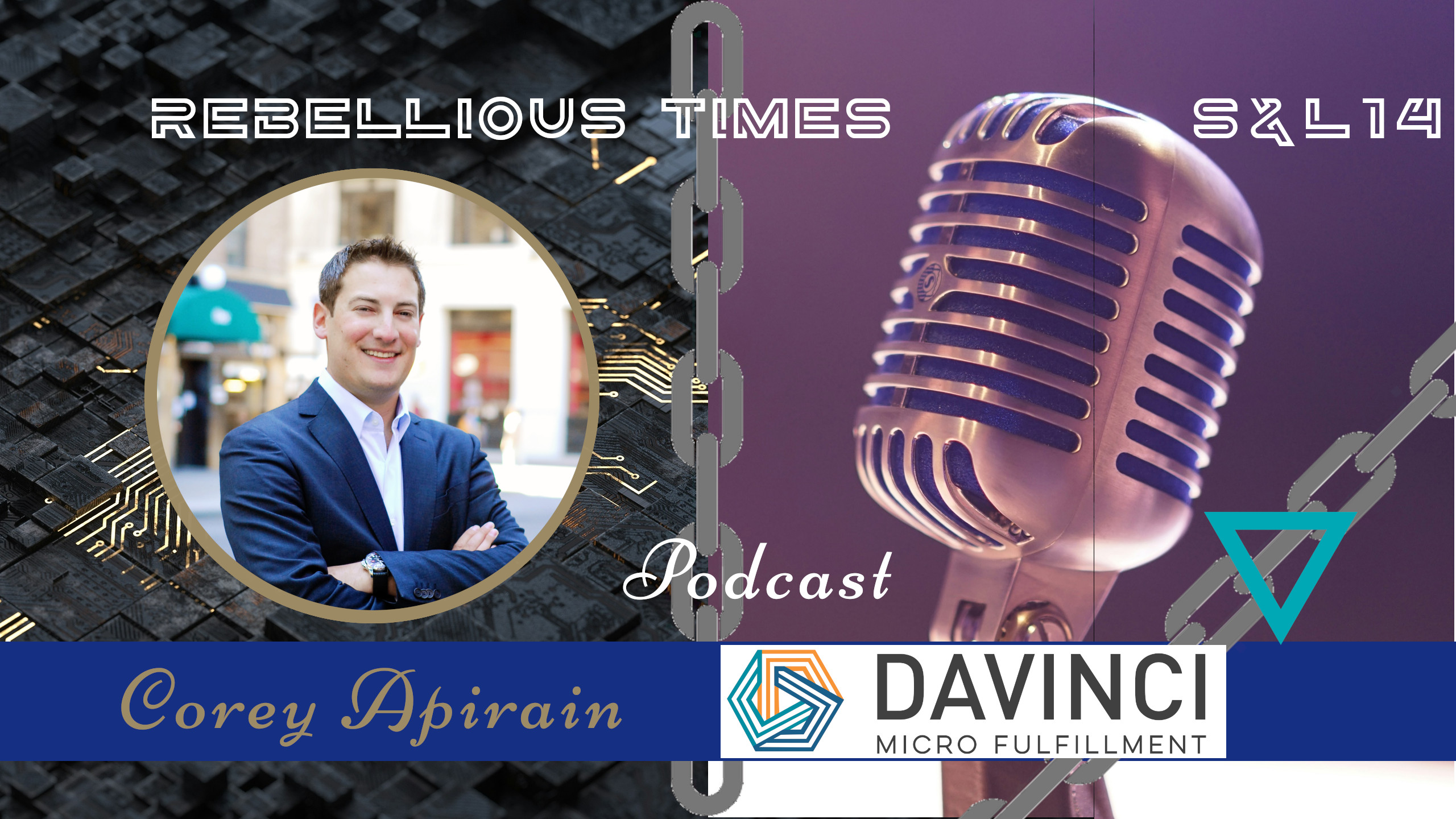
Corey Apirian, CEO of DaVinci Micro Fulfillment, is this week’s guest on the Rebellious Times Podcast. He explains why micro fulfillment centers are changing how e-commerce brands ship to customers. That shift comes with real costs to get right.
From a Syracuse Warehouse Internship to an Amazon Top Vendor Award
Corey majored in supply chain management at Syracuse University starting in 2004. Back then, only a handful of schools even offered it as a major, and Amazon.com was the program’s own case study. During his junior year, he took an internship at a wholesale distributor of appliances and personal care items. Amazon contacted that warehouse directly, asking to list its products online, so Corey built the pick-and-pack program that made it possible. Within two months, it had grown into a multimillion-dollar business, and Amazon named him one of its top vendors in the category. Other major retailers noticed. He went on to build similar drop-ship and ship-to-store integrations for Macy’s, Lowe’s, Walgreens, Sam’s Club, and Walmart.
Why Good Supply Chain Management Depends on the Problem You’re Solving
There’s no single formula for a strong supply chain operation, according to Corey. A high-fashion apparel brand is different, limited by minimum order quantities and seasonal cycles. It might hold inventory in one large warehouse for months at a time instead. A fast-moving consumer brand needs the opposite: inventory spread across several regional buildings so it reaches customers quickly. The disciplines underneath both are the same: receiving, inventory control, labor planning, site design. The real differentiator is how a company turns inventory, trains people, and builds culture around the work.
The Story Behind the Name DaVinci Micro Fulfillment
Corey named his company while reading Walter Isaacson’s biography of Leonardo da Vinci. He was drawn to the idea that everything in nature and math connects through the same proportions, the golden ratio, the Vitruvian Man. That idea mapped directly onto what he saw missing in e-commerce fulfillment. Brands weren’t placing inventory in proportion to where their customers actually were. There’s a personal layer to the name too. His oldest son, Leo, was one year old when Corey started the company. He now has three boys under eight.
Inside a Micro Fulfillment Center: Getting Inventory Closer to the Customer
A DaVinci micro fulfillment center is a 35,000 to 50,000 square foot facility. It’s built purely for pick-and-pack, not for storing massive pallet volumes. Corey runs six of them today. Close to 100% of DaVinci’s deliveries land within two days, about 85 to 90% arrive next day, and roughly 25% arrive same day. Most of those centers sit within 500 miles of the customers they serve. Consumer expectations are only pushing further in that direction, since Corey pointed to research suggesting over 80% of consumers will expect one-day or same-day delivery by 2030.
Where Carrier Shipping Is Headed, and Why DaVinci Plays a Different Game
National carriers, UPS, FedEx, the postal service, are losing volume to Amazon’s own shipping network. Regional players like Better Trucks, OnTrac, and GLS are gaining too, alongside newer entrants such as GoFo and UniUni. Corey also walked through zone skipping: trucking parcels in bulk across the country instead of shipping them by air. They get sorted locally once they arrive, ready for final delivery. Over 30,000 order fulfillment companies exist today, and plenty are being rolled up by private equity. Even so, Corey doesn’t see anyone else running a true network of micro fulfillment centers. His is built specifically around decentralized inventory and seller-fulfilled Prime. That’s what keeps Corey in the industry after two decades: the people, the competition, and a community that stays tightly connected even while competing hard for the same customers.
Chapters
00:01 Introduction
00:41 From Syracuse to an Amazon Top Vendor Award
03:51 What Makes a Supply Chain Operation Successful
07:57 The Story Behind the Name DaVinci Micro Fulfillment
11:00 How Delivery Expectations Have Changed Since 2-Day Shipping
12:32 Inside a Micro Fulfillment Center
18:10 Carrier Trends: Nationals, Regionals, and Zone Skipping
21:08 Competing in a Crowded Fulfillment Market
24:22 What Keeps Corey Motivated
26:03 Where to Find Corey and DaVinci Micro Fulfillment
[Guest headshot — alt text: “Corey Apirian, CEO of DaVinci Micro Fulfillment, a micro fulfillment center network”]
Guest Links
LinkedIn: https://www.linkedin.com/in/corey-apirian/
Website: https://davincimicrofulfillment.com/about/

How Daniel Bought a Business: Inside the Search Fund Process
Committing to entrepreneurship through acquisition meant giving himself one real year to find something worth buying. Daniel estimates he looked at close to 1,000 businesses before finding Fleet. He met somewhere between 10 and 15 owners in person. He learned quickly that a seller who can’t speak confidently about their own numbers is usually a red flag. Diligence on Fleet took three months rather than the more typical two. That included an outside accounting firm, lawyers, and an SBA loan process. He also shadowed the previous owner one day a week for months. Daniel’s advice for anyone considering the same path is blunt: don’t fall in love with a business until after you’ve bought it. Never let a broker rush your diligence timeline either. He bought Fleet Packaging in September 2023. Three years in, he says the accounting firm’s diligence found nothing he hadn’t already uncovered himself.
Corey Apirain links:
Podcast: Play in new window | Download
Subscribe: Apple Podcasts | Spotify | RSS