
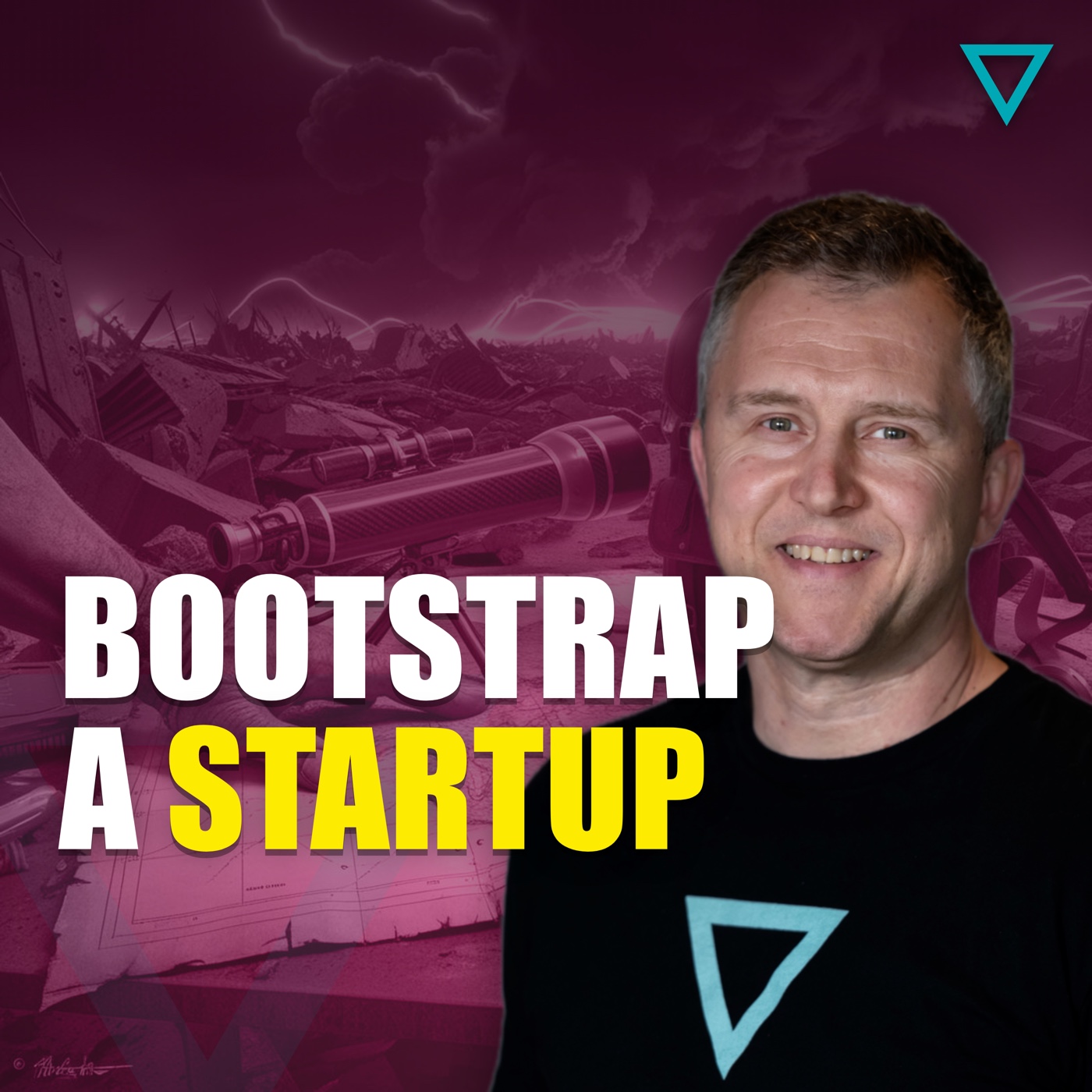
How Phillip Duong Learned to Bootstrap a Startup by Betting Everything
Phillip Duong didn’t set out to bootstrap a startup by selling his house but when he needed to fund Quartrly, his fourth company, that’s exactly what he did. A software implementation veteran turned four-time founder, Phillip joined the Rebellious Times Podcast to talk about what three failed startups taught him, why he moved his family from California to Las Vegas, and what it actually costs to go all in on a marketplace business with no outside capital.
Four startups, one hard-won lesson in failure
Phillip traces his startup instinct back to a news story: Snapchat turning down a $3 billion buyout offer. That one article convinced him he needed to build something of his own. Three startups later, each one taught him something the last one didn’t, streamlining decisions, sharpening his instincts, and teaching him when to walk away. His rule for knowing when to quit is simple: evaluate the upside and downside honestly, then trust your gut. Quartrly, he says, is already worth 100 times what his first startup ever could have been, which is why he has no regrets about that one failing.
What Quartrly actually sells: 15 minutes of someone’s time
The name is deliberate. Phillip droped the “e” from “quarter,” because a Quartrly call is a quarter of an hour. The platform lets anyone with an audience, from micro-influencers to topic experts, charge for a 15-minute video call instead of giving their time away for free. Hosts set their own price, attendees book and pay in one place, and a two-way review system is meant to keep both sides honest. Quartrly launched into public beta days before this conversation, with Phillip’s own profile priced at $20 a call while he stress-tests the system — a rate he says will eventually be closer to $1,000 for his own time. Figuring out exactly who that offer is for is a challenge another early-stage founder, Rob Kaminski, tackled head-on in an earlier episode on startup positioning.
Selling the house, moving to Las Vegas
Funding Quartrly meant selling his California home outright. The move to Las Vegas wasn’t just about freeing up capital — housing ran roughly 50% cheaper, there’s no state income tax, and staying in the Southwest kept him close to family in Arizona and California. It’s the kind of tradeoff that doesn’t show up in a pitch deck but shapes whether a bootstrapped founder can actually survive long enough to find out if the idea works.
Chapters
0:00 – Four startups, one hard-won lesson in failure
6:47 – What Quartrly actually sells: 15 minutes of someone’s time
15:19 – Selling the house, moving to Las Vegas
17:42 – Going solo: family, 60-hour weeks, and scaling later
24:19 – Trust, safety, and the billion-dollar bet

Going solo: family, 60-hour weeks, and scaling later
Phillip is Quartrly’s sole founder by choice, even though he knows most investors prefer a founding team. He’s candid that building a startup this way means real sacrifice, closer to 60 hours a week than 40, with family time put on hold until the business proves itself. His scaling math is simple: a company’s size is a function of how much value it delivers to how many people. Give a thousand dollars of value to ten million people, he says, and you’ve got a ten-billion-dollar company. Hiring comes later, once revenue tells him which roles actually move the needle. Tim Lidman described taking the same high-stakes bet with Clyde AI in a previous episode, putting everything on the line before the business has proven itself.
Trust, safety, and the billion-dollar bet
Letting strangers pay strangers for video time raises obvious risk, and Phillip walks through how Quartrly handles it via a two-way review system, content moderation, and a policy line against anything adult-oriented, largely driven by what Quartrly’s own payment and compliance vendors will allow. He’s betting the appetite for paid access to real people, not just celebrities, is bigger than it looks and that a platform built on nothing but a cell phone is how he gets there.
Connect with Phillip Duong
Podcast: Play in new window | Download
Subscribe: Apple Podcasts | Spotify | RSS